
1. Home
  2. Fibrinet® PRF Wound Matrix
From The Patient. For The Patient.
Fibrinet® PRF Wound Matrix represents an easy and efficient method to harness and concentrate a patient’s own platelets and associated growth factors into a durable Platelet-Rich Fibrin Matrix (PRFM).

Fibrinet® PRF Wound Matrix is designed to support the body’s natural healing processes by delivering a structured, autologous fibrin matrix directly to the wound site. The result is a simple, point-of-care solution that integrates seamlessly into advanced wound management protocols while leveraging the patient’s own biologic potential.

92% OF WOUNDS ACHIEVED1 ≥ 50% REDUCTION IN WOUND SIZE1
57% COMPLETE CLOSURE AT 12 WEEKS1
MEAN TIME TO HEAL: 6.75 WEEKS1

Autologous PRF Matrix For Wound Management

Key Features of the Fibrinet® PRF Wound Matrix System

  • The system provides intact, concentrated platelets in a platelet-rich fibrin membrane graft without thrombin2,5
  • Sustained availability of platelets and associated growth factors out to seven days; ability to proliferate cells in vitro2-4
  • Easy-to-use, closed system with the highest platelet capture efficiency and reproducibility5
  • Under the supervision of a healthcare professional, the PRP gel produced may be topically applied for the management of cutaneous wounds, including: Diabetic ulcers, Venous leg ulcers, Mechanically or surgically debrided wounds.

How It Works

Coverage

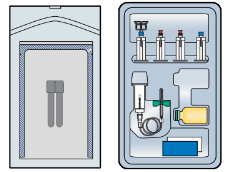
  • Single Kit: Covers up to 6 cm2
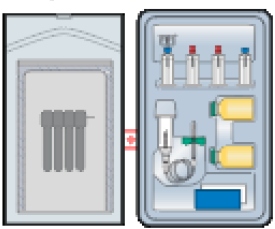
  • Double Kit: Covers up to 12 cm2

Structual Strength

Mechanical characterization of bifacial PRFM demonstrates improved structural stiffness compared to conventional fibrin gels, creating a durable fibrin scaffold designed to support the wound environment.2

Biological Activity

Preclinical would models have demonstrated that PRFM can support endothelial cell proliferation and the expression of associated tissue repair markers.3 Clinical observational studies have reported wound reduction and closure in chronic lower extremity ulcers treated with PRFM.3 1,7

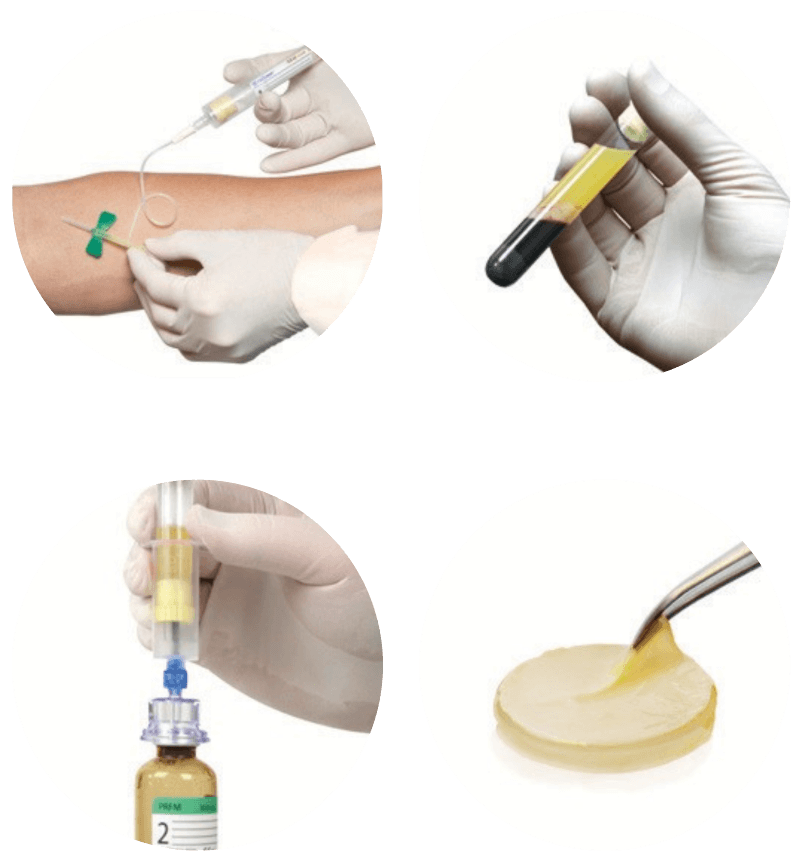
Simple, Safe Point-of-care Preparation

Draw

Spin

Transfer

Spin

Apply

Core Elements of Tissue Repair

Scaffold

Fibrinet® prepares an autologous platelet-rich fibrin membrane from a small sample of the patient’s blood at the point of care without the use of exogenous activators such as bovine thrombin.

The resulting PRFM demonstrates enhanced mechanical properties compared with conventional fibrin clots, with stiffness up to 600× greater and mechanical characteristics comparable to arterial tissue.2

Signals

Autologous platelets contain numerous growth factors that support the wound healing cascade. Preclinical models evaluating PRFM have demonstrated sustained concentrations of key growth factors for up to seven days, including:
  • VEGF – associated with angiogenesis and the formation of new blood vessel formation2,8
  • PDGF-A/B – involved in cellular recruitment and matrix formation during tissue repair2
  • TGF-B1 – involved in regulation of fibroblast activity during tissue repair2

Cells

Scanning electron microscopy has demonstrated intact platelets within the fibrin matrix. An additional preclinical (ex-vivo/in-vitro) study demonstrated greater than 50% platelet viability for up to seven days.2
Scanning Electron Micrograph (SEM) image shows a robust, fibrin scaffold with clusters of platelets in the PRFM (HD)

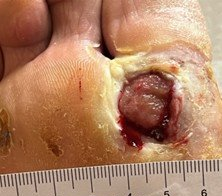
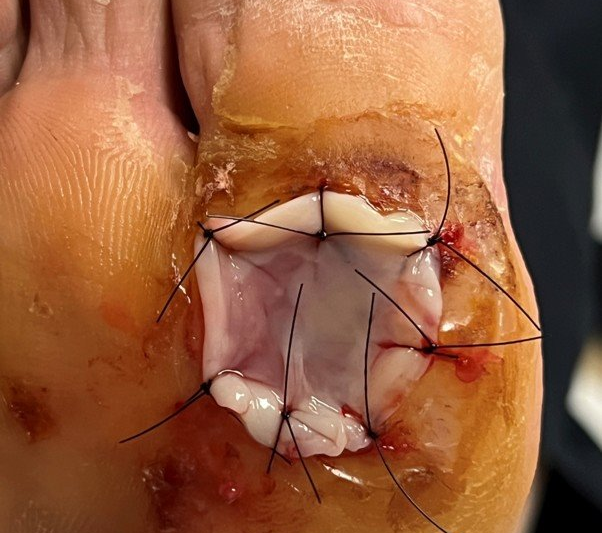
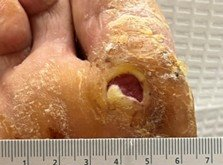
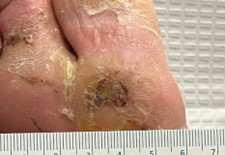
Image 1: 65 year old male with history of ulcer submetatarsal right #1 for 6 months a) Screening Visit [SV1] b) Application Visit, 2 weeks post-screening [TV1], c) Treatment Visit #3 [TV3], d) Ulcer closed on Treatment Visit #5 [TV5] 1

Reimbursement

Fibrinet® PRF Wound Matrix is 510k approved for wounds. Royal Biologics is committed to physicians and facilities using Fibrinet® PRF Wound Matrix to benefit their patients. Learn more about the coding, billing, and reimbursement below:

G0465 – Diabetic Chronic Wounds

$2,107.97

HOPD

$83.84

MD in HOPD

$1,064.49**
($920.19-$1,509.27)

Office / Mobile

20 Weekly Applications

CMS Coverage

2

MUE
** Geographic Adjustment Applies ($920.19-$1,509.27)

G0460 – Non-Diabetic Chronic Wounds

Carrier Priced. Coverage determined by MAC;
Not Covered per NCD

1

MUE

National Coverage

Our proprietary, patented technology supports the use of advanced biologic products that may be eligible for coverage under Medicare and certain Medicare Advantage plans.

Effective for services performed on or after April 13, 2021, the Centers for Medicare & Medicaid Services (CMS) will cover autologous PRP for the treatment of chronic non-healing diabetic wounds under section 1862(a)(1)(A) of the Social Security Act (the Act) for a duration of 20 weeks, when prepared by devices whose Food and Drug Administration-cleared indications include the management of exuding cutaneous wounds, such as diabetic ulcers.

  • 20 weekly applications
  • Chronic Diabetic Wounds (head to toe)
  • Not subject to skin substitutes documentation and policy limitations

G0465 – Diabetic Chronic Wounds , FDA-cleared device

Autologous platelet rich plasma (PRP) or other blood-derived product for diabetic chronic wounds/ulcers, using an fda-cleared device for this indication, (includes as applicable administration, dressings, phlebotomy, centrifugation or mixing, and all other preparatory procedures, per treatment)

G0460 – Non-Diabetic Chronic Wounds

Autologous platelet rich plasma (PRP) or other blood-derived product for NON-diabetic chronic wounds/ulcers, using an fda-cleared device for this indication, (includes as applicable administration, dressings, phlebotomy, centrifugation or mixing, and all other preparatory procedures, per treatment)

For Coverage and Reimbursement of G0465, the patient must have:

  • ONE Diabetic Diagnosis code (E Code)
    AND
  • ONE Non-Pressure Chronic Ulcer Code (L Code)
E08E09E10E11E13
LocationDiabetes Due to Underlying ConditionDiabetes Drug or Chemical InducedDiabetes Type IDiabetes Type IIDiabetes Other
FootE08.621E09.621E10.621E11.621E13.621
OtherE08.622E09.622E10.622E11.622E13.622

LocationBreakdown of SkinFat Layer ExposedNecrosis of MuscleNecrosis of BoneMuscle Involvement w/o Evidence of NecrosisBone Involvement w/o Evidence of NecrosisOther Specified Severity
Lower Extremity
Left
Thigh LeftL97.121L97.122L97.123L97.124L97.125L97.126L97.128
Calf LeftL97.221L97.222L97.223L97.224L97.225L97.226L97.228
Ankle LeftL97.321L97.322L97.323L97.324L97.325L97.326L97.328
Heel & Midfoot LeftL97.421L97.422L97.423L97.424L97.425L97.426L97.428
Other Parts of Foot LeftL97.521L97.522L97.523L97.524L97.525L97.526L97.528
Other Parts of Leg LeftL97.821L97.822L97.823L97.824L97.825L97.826L97.828
Right
Thigh RightL97.111L97.112L97.113L97.114L97.115L97.116L97.118
Calf RightL97.211L97.212L97.213L97.214L97.215L97.216L97.218
Ankle RightL97.311L97.312L97.313L97.314L97.315L97.316L97.318
Heel & Midfoot RightL97.411L97.412L97.413L97.414L97.415L97.416L97.418
Other Parts of Foot RightL97.511L97.512L97.513L97.514L97.515L97.516L97.518
Other Parts of Leg RightL97.811L97.812L97.813L97.814L97.815L97.816L97.818
Upper Extremity
ButtocksL98.411L98.412L98.413L98.414L98.415L98.416L98.418
BackL98.421L98.422L98.423L98.424L98.425L98.426L98.426
AbdomenL98.431L98.432L98.433L98.434L98.435L98.436L98.438
ChestL98.441L98.442L98.443L98.444L98.445L98.446L98.448
NeckL98.451L98.452L98.453L98.454L98.455L98.456L98.458
FaceL98.461L98.462L98.463L98.464L98.465L98.466L98.468
GroinL98.471L98.472L98.473L98.474L98.475L98.476L98.478
Skin of Other SitesL98.491L98.492L98.493L98.494L98.495L98.496L98.498
Left
Upper Arm LeftL98.A121L98.A122L98.A123L98.A124L98.A125L98.A126L98.A128
Forearm LeftL98.A221L98.A222L98.A223L98.A224L98.A225L98.A226L98.A228
Hand LeftL98.A321L98.A322L98.A323L98.A324L98.A325L98.A326L98.A328
Right
Upper Arm RightL98.A111L98.A112L98.A113L98.A114L98.A115L98.A116L98.A118
Forearm RightL98.A211L98.A212L98.A213L98.A214L98.A215L98.A216L98.A218
Hand RightL98.A311L98.A312L98.A313L98.A314L98.A315L98.A316L98.A318

NCD 270.3 coverage applies to the following site of service:

• POS 11 – Office
• POS 12 – Home/private residence
• POS 19 – Off-campus hospital outpatient
• POS 22 – On-campus hospital outpatient
• POS 31 – Skilled Nursing
• POS 49 – Independent clinic

  • Diabetes Diagnosis Code (see covered codes on chart per NCD)
  • Chronic Wound Diagnosis Code (see covered codes on chart per NCD)
  • Duration of Wound
  • Baseline Measurements
  • Conservative Care Measures Taken
  • Measurements Post Conservative Care


The above documentation should be carried through to each PRP application and chart note

  • PRP Treatment Application number
  • Name of PRP system used
  • Wound Measurements
  • Treatment plan and patient progression

ORDERING INFORMATION

  • Part NumberDescription
  • PRF-01 Fibrinet PRF Wound Matrix, Single Kit
  • PRF-02 Fibrinet PRF Wound Matrix, Double Kit

REFERENCES

1. Fridman R, Wielgomas J. A Prospective Study to Evaluate Efficacy and Safety of Autologous Platelet-Rich Fibrin Matrix for the Treatment of Chronic Diabetic Foot Ulcers. Clin Res Foot Ankle. 2024;12:590. doi:10.4172/2329-910X.1000590.

2. Lucarelli E, et al. A recently developed bifacial platelet-rich fibrin matrix. Eur Cells Materials 2010; 20:13-23.

3. Roy S, Sen CK, et al. Platelet-rich fibrin matrix improves wound angiogenesis via inducing endothelial cell proliferation. Wound Rep Regen. 2011;19(6):753-766.

4. Visser LC, Arnoczky SP, Caballero O, et al. Platelet-rich fibrin constructs elute higher concentrations of TGF-ß1 and increase tendon cell proliferation over time when compared to blood clots of similar volume: A comparative in vitro analysis. Vet Surg. 2010c; 39(7):811-817.

5. Castillo TN, Pouliot MA, Kim HJ, Dragoo JL. Comparison of growth factor and platelet concentration from commercial PRP separa- tion systems. Am J Sports Med. ePub Nov 4, 2010.

6. Roy S., Driggs J., Elgharably H., et al. Platelet-rich fibrin matrix improves wound angiogenesis via inducing endothelial cell proliferation. Wound Repair Regen. 2011;19:753-766.

7. O’Connell SM, Impeduglia T, Hessler K, Wang X-J, Carroll RJ, Dardik H.Autologous platelet-rich fibrin matrix as cell therapy in the healing of chronic lower-extremity ulcers. Wound Repair and Regeneration. 2008;16(6):749–756. doi:10.1111/j.1524-475X.2008.00426.x

8. Johnson KE, Wilgus TA. Vascular Endothelial Growth Factor and Angiogenesis in the Regulation of Cutaneous Wound Repair. Adv Wound Care (New Rochelle). 2014 Oct 1;3(10):647-661. doi: 10.1089/wound.2013.0517. PMID: 25302139; PMCID: PMC4183920.

About Royal

Royal is a pioneering leader in orthobiologic and wound care research and development. Royal’s commitment lies in delivering top-tier, innovative biologic solutions that enhance the healing process and improve patients' quality of life. Royal places patient well-being at the center of its mission, offering exceptional solutions to address a variety of complex needs.

At Royal, our mission is driven by patient-centered care, innovation and excellence, and integrity and compassion.
Royal provides a comprehensive array of products tailored to meet the varied needs of the orthobiologic and wound care industry.

As a rapidly expanding force in the industry, Royal is continuously developing and launching new products and solutions that set benchmarks for quality, effectiveness, and patient outcomes. Royal’s commitment to research and innovation keeps it at the forefront of the industry, helping to shape the future of healthcare and improving lives.